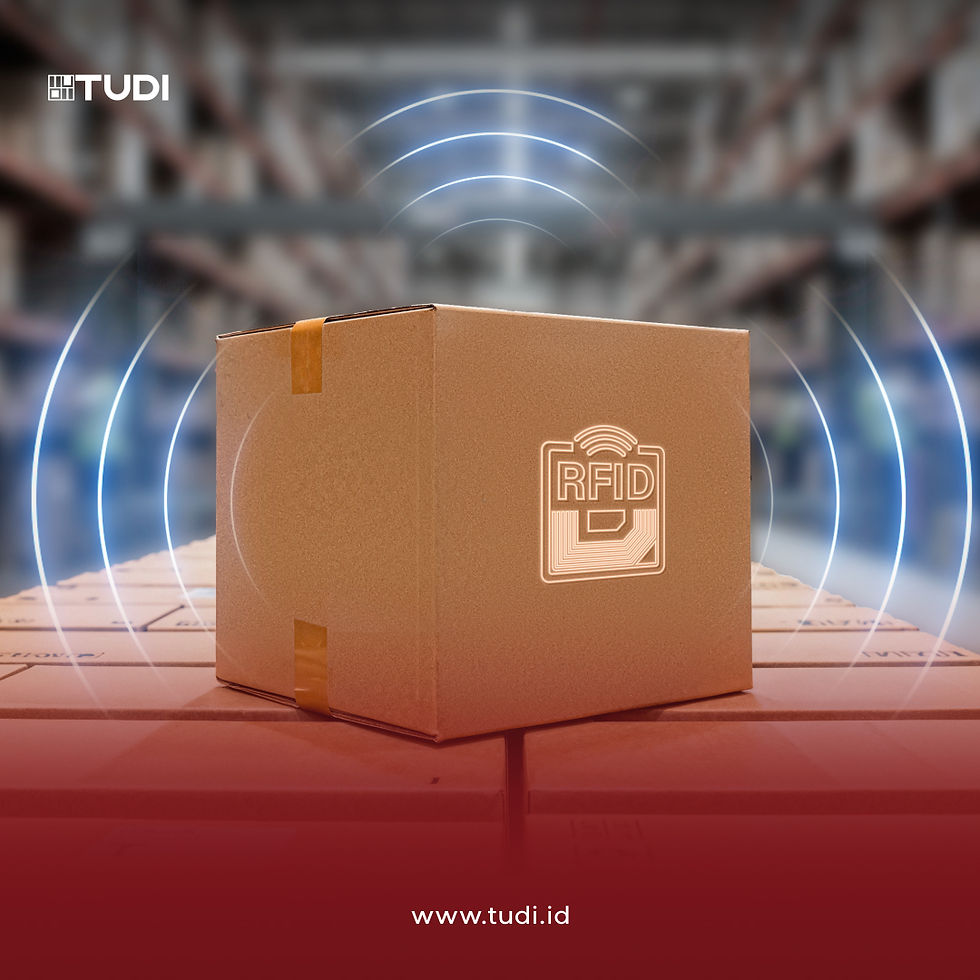
Radio Frequency: Definition, Function, How It Works, and Its Applications


In the current era of digital and industrial automation, radio frequency is an important foundation for various communication technologies and automatic identification. From wireless communication systems to RFID, this technology enables data exchange without physical contact. In a business environment that demands speed, accuracy, and efficiency, the utilization of radio frequency helps companies improve operational visibility. It is not surprising that radio frequency is now a key component in digital transformation across various industrial sectors.
Radio Frequency Definition
Radio frequency is an electromagnetic wave with a certain frequency range used to transmit signals or data through the air. This wave is in the radio frequency spectrum and can propagate without requiring a physical medium such as a cable. In practice, radio frequency is used for voice communication, data, and automatic identification.
In the context of industrial technology, radio frequency is often associated with radio wave-based identification systems such as RFID. Although both use radio frequency, general wireless communication applications are different from RFID systems, which focus on automatic object identification and tracking processes.
Radio Frequency Functions
Radio frequency has an important role in supporting various modern technology systems. Here are some of its main functions.
1. Wireless Data Transmission Medium
Radio frequency functions as a medium for sending and receiving data wirelessly. This enables efficient short- to long-distance communication. This technology is the basis for cellular networks, Wi-Fi, and RFID systems.
2. Automatic Identification
In automatic identification systems, radio frequency is used to read and write data on tags or labels. This process is fast and does not require direct contact. This function is very important for asset and inventory tracking.
3. Supports Process Automation
Radio frequency helps automate business processes by reducing manual intervention. Data can be collected in real-time and directly integrated with backend systems. The impact is increased operational efficiency and accuracy.
Radio Frequency System Components
For radio frequency to work optimally, several supporting components are needed in one system.
1. Signal Source
The signal source functions to generate radio frequency waves. In communication systems, this component is usually a transmitter. The quality of the signal source greatly affects the stability of the transmission.
2. Antenna
The antenna plays a role in transmitting and receiving radio frequency waves. The design and type of antenna determine the signal range and direction. In industrial applications, antenna selection is crucial to ensure system performance.
3. Signal Receiver
The signal receiver is responsible for capturing radio frequency waves and converting them into processable data. This component is often called the receiver. The receiver's sensitivity determines the accuracy of the received data.
4. Data Processing System
After the signal is received, the data will be processed by a processing system such as middleware or application software. This system connects radio frequency data with business processes. Good integration ensures data is ready for real-time use.
How Radio Frequency Works
In general, the radio frequency working process starts with the signal source transmitting the signal through the antenna. Radio waves then propagate in the air towards the receiver. This process occurs very quickly and can cover various distances depending on the frequency and transmission power.
In industrial applications such as RFID, radio frequency is used to activate tags and read the data stored in them. The data is then forwarded to the processing system for analysis or storage. This flow enables the identification and tracking process to take place automatically.
Advantages of Radio Frequency
This technology offers various advantages in improving operational efficiency.
1. Wireless Communication
Radio frequency allows data exchange without dependence on physical cables. This provides high flexibility in installation and use. The system becomes easier to develop according to needs.
2. Speed and Efficiency
Data transmission using radio frequency is fast and stable. This process supports real-time data retrieval. Operational efficiency also increases significantly.
3. Flexible for Various Applications
Radio frequency can be used in various scenarios, from communication to automatic identification. This flexibility makes it an adaptive technology. Various industries can utilize it according to specific needs.
Disadvantages of Radio Frequency
Although it has many advantages, there are a few things to consider in its implementation.
1. Potential Signal Interference
Radio frequency is susceptible to interference from other devices or the surrounding environment. This interference can affect the quality of the transmission. Mature system planning is required to minimize this risk.
2. Range Limitation
Each frequency has a certain range limit. The higher the frequency, the shorter the range usually is. This needs to be considered when designing the system.
3. Security Aspect
Wireless transmission has the potential to be intercepted if it is not equipped with adequate security systems. Therefore, data protection is an important aspect. The use of encryption and access control is highly recommended.
Radio Frequency Applications in Various Industries
This technology is now used in various sectors due to its flexibility and efficiency.
1. Retail
Radio frequency assists in stock counting (stock opname) and loss prevention. Inventory data can be obtained quickly and accurately. This increases stock visibility at the item level.
2. Logistics
In logistics, radio frequency is used for real-time goods tracking. Inbound and outbound processes become more controlled. Supply chain efficiency also increases.
3. Manufacturing
Radio frequency supports material and work-in-progress tracking. The production system becomes more transparent. Manual errors can be significantly reduced.
4. Healthcare
In the healthcare sector, radio frequency is used for equipment and patient identification. The administration process becomes safer and more accurate. This supports better service quality.
5. Transportation
Radio frequency is utilized for ticketing systems, vehicle tracking, and access management. Operational processes become faster. User experience also improves.
6. Libraries
Radio frequency assists in book collection management and lending processes. Inventory can be done more efficiently. The risk of collection loss can be minimized.
Conclusion
Radio frequency is a basic technology that enables communication and identification without cables. Its role is very important in supporting industrial automation and digitalization systems. With its ability to transmit data quickly and flexibly, radio frequency is the foundation for various modern solutions.
In implementation in the industrial world, a correct understanding of how radio frequency works, its components, and its limitations is very necessary. Mature system planning will help maximize the benefits of this technology. Integration with business systems is also key to success.
As an end-to-end RFID solution provider, TUDI is ready to help you design an efficient and integrated radio frequency-based system. Consult your needs with the TUDI expert team to find the best solution for your business.