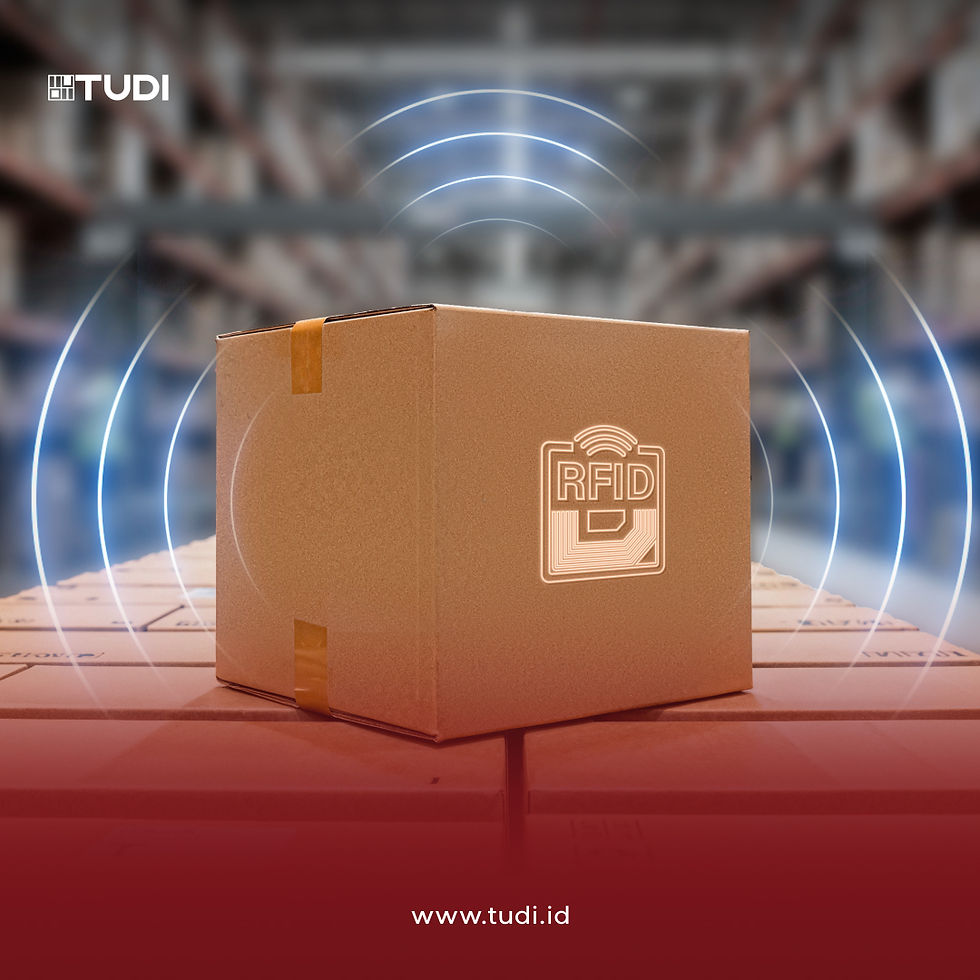
What is RFID Reader: Definition, Function, Types, How It Works, and Applications


In the era of industrial automation and digitalization, the need for fast and accurate data identification is becoming increasingly important. Many companies are beginning to shift from manual systems to automatic identification technology to increase operational efficiency. One of the key devices in this system is the RFID reader. However, many still wonder, what is an RFID reader and what is its role in the overall RFID system.
What is an RFID Reader
An RFID reader is an electronic device that functions to read and write data from RFID tags using radio waves. When discussing what is an RFID reader, this device can be understood as the link between the RFID tag and the information system, as the reader captures data from the tag and then transmits it to the backend system.
In practice, an RFID reader works by transmitting radio signals through an antenna. The signal activates a passive RFID tag or communicates directly with an active tag. The read data is then processed and used for various needs, such as asset tracking, inventory recording, and security systems.
Function
The RFID reader plays an important role in supporting automatic identification systems in various industrial sectors. Here are some of its main functions.
1. Reading RFID Tag Data
The main function of an RFID reader is to read the unique information stored in the RFID tag. This process can be done without direct contact and without requiring a line of sight, making it far more efficient than barcodes.
2. Writing and Updating Data
In addition to reading, some RFID readers are also capable of writing or updating data on the RFID tag. This feature is useful for applications such as updating item status or recording asset history.
3. Sending Data to the System
The RFID reader functions as a data sender to management systems such as ERP or WMS. The data sent is real-time, supporting faster and more accurate decision-making.
4. Supporting Process Automation
With proper integration, the RFID reader enables the automation of business processes such as recording the entry and exit of goods, stocktaking, and access control.
Types of RFID Readers
After understanding what an RFID reader is, it is also important to know its types. Each type of RFID reader is designed for different needs and operating environments.
1. Fixed RFID Reader
A Fixed RFID reader is a reader that is permanently installed in a specific location, such as a warehouse door, conveyor, or access gate. This type is ideal for automatic monitoring processes with large data volumes and repetitive activities.
2. Handheld RFID Reader
A Handheld RFID reader is a portable device that can be carried by operators. This reader is widely used for stocktaking, asset auditing, and inventory checking activities because it is flexible and easy to use in the field.
3. Integrated RFID Reader
An Integrated RFID reader is a device that combines the reader, antenna, and processing system in one unit. This type is usually used in automated machines, kiosks, or embedded systems that require a compact design and practical installation.
4. Desktop RFID Reader
A Desktop RFID reader is generally used at a desk for the process of registering or encoding RFID tags. This type is suitable for applications with short reading distances and high precision needs.
Components
The RFID reader system consists of several main components that are integrated with each other.
1. Reader Module
The reader module functions as the center for processing RFID signals. This component manages communication between the tag and the system.
2. Antenna
The antenna is responsible for transmitting and receiving radio waves from the RFID tag. The type and number of antennas affect the reading distance and area.
3. Communication Interface
Communication interfaces such as LAN, USB, or serial are used to connect the RFID reader with the backend system or middleware.
4. Power Source
The power source ensures that the RFID reader can operate stably, either through a power adapter or a battery for handheld devices.
How It Works
The way the RFID reader works begins when the reader transmits a radio signal through the antenna. This signal is then received by the RFID tag within the reading range.
The RFID tag responds by sending the stored data to the RFID reader. This data is then processed and forwarded to the application system to be displayed, stored, or analyzed according to operational needs.
Advantages
This technology offers various advantages in increasing operational efficiency.
1. Fast and Mass Reading
The RFID reader is capable of reading many tags simultaneously in a short time, making it very effective for high-volume environments.
2. Contactless and No Line of Sight
The reading process does not require physical contact or a direct visual position, making it more flexible than conventional technology.
3. Supports Full Automation
With the right system integration, the RFID reader can perform processes automatically without manual intervention.
Disadvantages
Despite its many advantages, there are some things that need to be considered in its implementation.
1. Implementation Costs
The initial investment for RFID reader devices and infrastructure is relatively higher than barcode systems.
2. Environmental Influence
Factors such as metal, liquids, and signal interference can affect reading performance if not designed correctly.
3. System Integration Needs
The RFID reader requires integration with a backend system so that the data can be utilized optimally.
Applications in Various Industries
This technology is now used in various sectors due to its flexibility and efficiency.
1. Retail
RFID readers help track stock at the item level, speed up inventory processes, and reduce loss of goods.
2. Logistics and Warehousing
In the logistics sector, RFID readers are used for real-time monitoring of goods movement and improving shipping accuracy.
3. Manufacturing
RFID readers support the tracking of raw materials, work in progress, and finished products to increase visibility of the production process.
4. Healthcare
In the healthcare industry, RFID readers are used for tracking medical devices, medicines, and hospital asset management.
5. Transportation
RFID readers support electronic ticketing systems, fleet management, and vehicle access control.
6. Libraries
RFID readers simplify the process of borrowing, returning, and inventorying book collections automatically.
Conclusion
Understanding what is an RFID reader is the first step to optimally adopting RFID technology. The RFID reader acts as the main device that enables the identification and data collection process to run quickly, accurately, and automatically.
In the industrial context, the use of RFID readers helps increase operational efficiency, reduce human error, and provide real-time data visibility. The selection of the right type of RFID reader, whether fixed, handheld, or integrated, depends heavily on the needs and operating environment.
As an end-to-end RFID solution provider, TUDI is ready to help you design an efficient and integrated RFID system. Consult your needs with the TUDI expert team to find the best solution for your business.