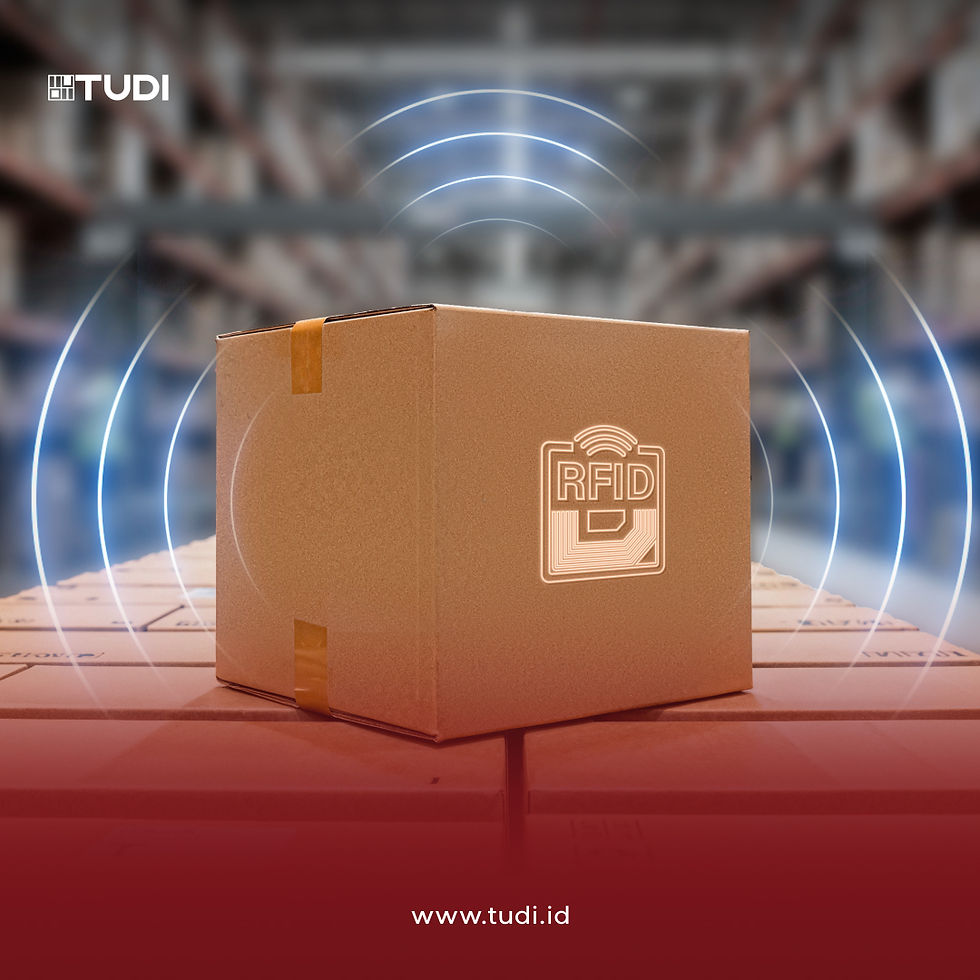
Passive RFID: Definition, Function, How it Works, Advantages, Disadvantages, Components, and Applications


In the modern era of automation, the need for fast and accurate tracking is key to operational efficiency. Passive RFID It offers contactless, automatic identification with competitive implementation costs and broad coverage. This technology is increasingly relevant in various industries that demand real-time visibility, precise inventory control, and seamless processes. This article discusses its definition, function, components, how it works, advantages, disadvantages, and applications. Passive RFID comprehensively.
Understanding Passive RFID
Passive RFID (Radio Frequency Identification) is a radio wave-based identification technology that uses tags without an internal power source (no battery). Passive tags obtain energy from the electromagnetic field emitted by the tag. reader, then reflects (backscatter) a signal containing identity data. This technology is commonly used for asset labeling, inventory management, and process automation due to its high scalability.
Terms often associated with passive RFID include: label RFID (printed label-based tags), inlay RFID (antenna substrate and chip before lamination), and passive tag (umbrella term for all battery-free tags). Meanwhile, frequency variants such as LF/HF/UHF determine reading distance and performance characteristics in the field.
Function
This section outlines the key roles of passive RFID in improving business process efficiency.
1. Automatic Asset Tracking
Passive RFID enables mass asset identification without line of sight, allowing for faster audit and inventory processes with consistent accuracy.
2. Inventory Management (Stock Control)
With simultaneous readings at shelves, warehouses, and doors, the system can update stock in real time. This reduces stock discrepancies and speeds up stock counts.
3. Automation of In-Out Processes
A UHF RFID portal at the dock door automatically records the movement of goods as they pass through the reading area. Data is directly integrated into a WMS/ERP for end-to-end visibility.
4. Authentication & Anti-Counterfeiting
Encoding unique data on passive tags simplifies product authenticity verification. Utilizing unique TIDs or UIDs on chips and serialized EPCs allows for authenticity verification and traceability of goods.
5. Pelacakan Work-in-Process (WIP)
In manufacturing, passive RFID helps monitor production progress at each workstation. Output and bottlenecks are detected early to optimize throughput.
Component
This section describes the main elements of an interconnected passive RFID system.
1. Tag (Passive Label/Inlay)
Contains a chip and antenna without a battery. Types include paper/film labels, hard tags for harsh environments, and on-metal tags for metal surfaces.
2. Reader (Fixed/Handheld)
A device that emits RF signals and receives backscatter from tags. The reader can be a fixed reader at the gate or a handheld reader for mobile scanning.
3. Antenna
Converts the reader's electrical energy into RF waves that are transmitted to the reading area. The choice of gain, radiation pattern, and polarization affects the distance and consistency of the reading.
4. Middleware/Integration Software
Processing raw data into structured information (filtering, deduplication, and events). Connecting to business systems such as WMS, ERP, or MES.
How it works
On the system passive RFID The reader emits radio waves through an antenna. Passive tags within the RF field capture this energy to activate the chip. Chip then modulates and reflects the signal containing the EPC/UID back to the reader antenna (backscatter mechanism).
The middleware then processes the received data to eliminate duplication, mark events (enter/exit), and send it to the business application. In the UHF RFID class, read ranges can reach several meters with high read rates, ideal for mass read operations.
Advantages
This technology offers various advantages in increasing operational efficiency.
1. Lower Tag Costs
Without batteries, passive tags are more economical, making them suitable for large volumes such as retail and logistics.
2. High Scalability
Simultaneous reading (anti-collision) capability facilitates wide-area and high-throughput implementation.
3. Low Maintenance Operation
There are no batteries to replace, so the total cost of ownership is lower and maintenance is simpler.
4. Speed & Accuracy
Non-line-of-sight reading reduces human error, speeds up processes, and improves inventory visibility.
Disadvantages
Even though it has many advantages, there are several things that need to be considered in its implementation.
1. Sensitive to the Environment
Materials such as metal and liquids can affect performance. Proper tag and antenna selection is required.
2. Limited Reading Distance Compared to Active
Compared to active (battery-powered) tags, passive RFID has a shorter reading distance and depends on power from the reader.
3. Precision System Design
Antenna placement, polarization angle, and power setting must be designed accurately to ensure stable and consistent readings.
4. Potential Interference
Dense RF environments or industrial noise can degrade read quality, requiring site surveys and parameter tuning.
Applications in Various Industries
This technology is now used in various sectors because of its flexibility and efficiency.
1. Retail
Passive RFID helps track stock at the item level, speeds up stock counts, improves on-shelf availability, and reduces shrinkage.
2. Logistics & Warehousing
Accelerate inbound-outbound, cross-docking, and visibility of goods movement through automatic reading portals at the dock door.
3. Manufacturing
Supports WIP tracking, electronic kanban, and component traceability to improve production line quality and efficiency.
4. Healthcare
Monitor clinical assets, drug supplies, and hospital linens to ensure availability and regulatory compliance.
5. Transportation
Used for tracking containers, baggage, and access management at transportation facilities and depots.
6. Library & Archives
Accelerate the circulation of loans/returns, collection inventory, and collection security.
Conclusion
Passive RFID provides reliable, economical, and scalable automatic identification for a wide range of industrial needs. The combination of contactless reading and mass read capabilities makes it a superior solution for asset visibility.
In implementation, proper system design, from tag selection and antenna selection to device placement, determines field performance. Integration with middleware and business systems ensures accurate data translates into operational action.
As an end-to-end RFID solutions provider, TUDI ready to help you design an efficient and integrated RFID system. Consult your needs with the TUDI team of experts to find the best solution for your business.