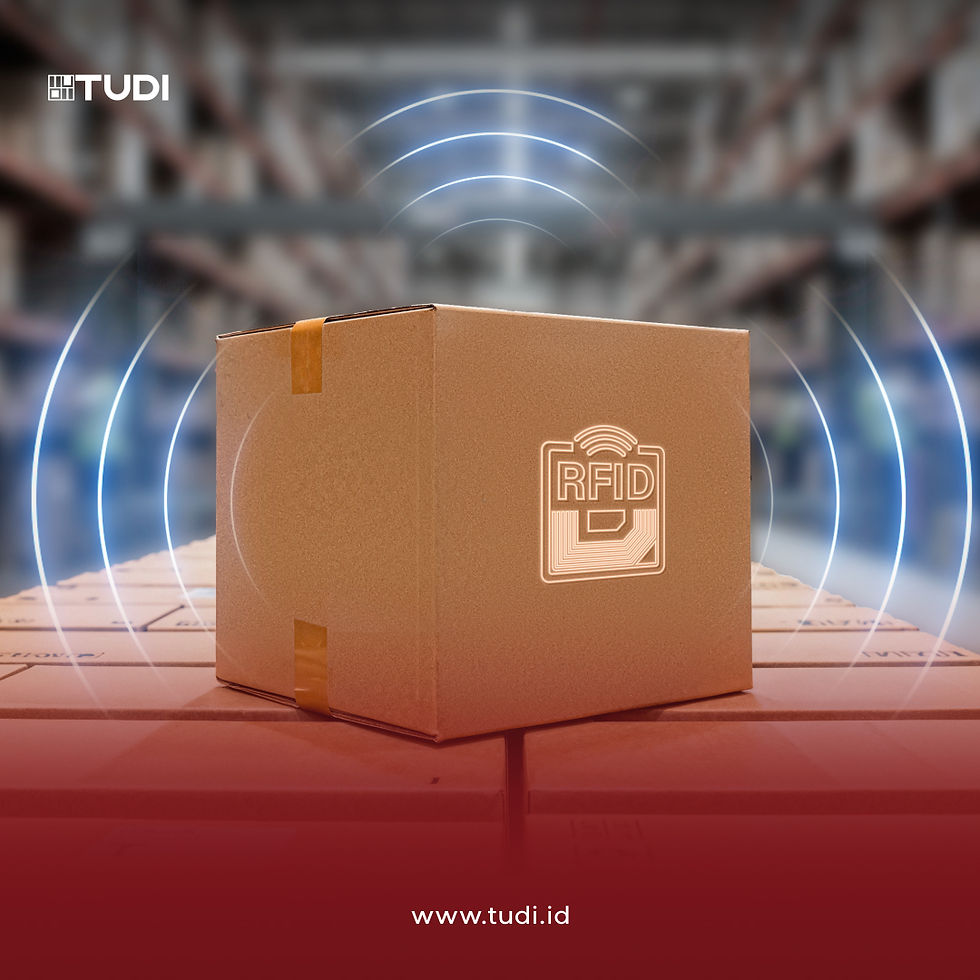
RFID Sensor: Definition, Functions, How it Works, and Applications


In the era of industrial automation and business process digitalization, the need for real-time data identification and monitoring systems is increasing. Companies are required to have accurate visibility into assets, inventory, and goods movement. One technology widely used to meet this need is the RFID sensor. This technology enables the identification process to be fast, automatic, and minimal human intervention.
Definition of RFID Sensor
An RFID sensor is part of a Radio Frequency Identification system that functions to detect, read, and transmit data from RFID tags using radio waves. In practice, the RFID sensor often refers to the combination of a reader and an antenna that are tasked with capturing signals from RFID labels or passive tags as well as active tags.
Unlike conventional sensors that only read physical conditions like temperature or light, an RFID sensor focuses on the unique identification of an object. Each tag has a special ID, allowing accurate tracking and data recording in various industrial scenarios.
Functions of RFID Sensor
RFID sensors play a crucial role in automation and automatic identification systems across various sectors.
1. Automatic Object Identification
RFID sensors allow item identification without direct contact or line of sight. This process speeds up data recording and reduces reliance on manual input.
2. Asset and Inventory Tracking
With RFID sensors, asset movements can be monitored in real time. This helps companies know the accurate location, status, and history of goods movement.
3. Operational Process Automation
RFID sensors support automation in inbound, outbound, and stock opname (stock count) processes. The workflow becomes more efficient and consistent.
4. Increased Data Accuracy
Automatic data reading minimizes human errors. The resulting information is more accurate and reliable for decision-making.
Components of RFID Sensor
An RFID sensor system consists of several main components that are mutually integrated.
1. RFID Tag
RFID Tags or RFID labels function as a medium for storing object identity data. Tags can be passive, active, or semi-passive depending on the application needs.
2. RFID Reader
The RFID reader acts as the main sensor that reads data from the tag. The reader will process the signal and forward it to the backend system.
3. Antenna
The antenna plays a role in transmitting and receiving radio waves between the tag and the reader. The design and type of antenna affect the reading distance and system accuracy.
4. Middleware or Integration System
Middleware manages the data from the RFID sensor readings so that it can connect with business systems such as ERP or WMS.
How RFID Sensor Works
The operation of an RFID sensor begins when the reader transmits radio waves through the antenna. These waves hit the RFID tag that is within reading range. The tag then responds by sending its identity data back to the reader.
The data received by the reader will be processed and sent to the application system through middleware. In the UHF RFID system, the reading distance can reach several meters, making it suitable for logistics and warehouse applications that require fast and bulk reading.
Advantages of RFID Sensor
This technology offers various advantages in increasing operational efficiency.
1. Fast and Bulk Reading
RFID sensors are able to read many tags simultaneously in a short time, unlike barcodes which must be scanned one by one.
2. Does Not Require Direct Contact
The reading process can be done without physical contact or line of sight, making it more flexible in various environmental conditions.
3. High Scalability
The RFID sensor system is easy to develop for small to large scale according to business needs.
4. Integration with Automation Systems
RFID sensors can be integrated with industrial automation systems to support data-driven decision-making.
Disadvantages of RFID Sensor
Despite having many advantages, there are a few things to consider in its implementation.
1. Relatively High Initial Investment
The initial cost for RFID sensor devices and supporting infrastructure can be higher than conventional identification technology.
2. Sensitivity to Environment
Certain metal materials and liquids can affect reading performance if the appropriate tag and antenna are not used.
3. Requires Technical Planning
The implementation of RFID sensors requires mature system planning so that the reading results are optimal and consistent.
Applications of RFID Sensors in Various Industries
This technology is now used in various sectors due to its flexibility and efficiency.
1. Retail
RFID sensors help track stock at the item level, speed up inventory processes, and reduce loss of goods.
2. Logistics and Warehousing
RFID is used to monitor the movement of incoming and outgoing goods in real time with high accuracy.
3. Manufacturing
RFID sensors support tracking of raw materials, work in process, and finished products to increase production visibility.
4. Healthcare
In the healthcare sector, RFID is used for tracking medical devices, medicines, and hospital asset management.
5. Transportation
RFID sensors help monitor vehicles, electronic ticketing, and access management automatically.
6. Library
RFID simplifies the management of book collections, the borrowing process, and returns quickly and accurately.
Conclusion
The RFID sensor is an important technology in automatic identification systems that supports efficiency, accuracy, and data visibility. With the ability to read data quickly and without direct contact, this technology is a key foundation in modern automation.
In its implementation, RFID sensors are widely used in various industries such as retail, logistics, manufacturing, and healthcare. With proper planning, this technology is able to provide significant added value for business operations.
As an end-to-end RFID solution provider, TUDI is ready to help you design and implement an efficient and integrated RFID sensor system. Consult your needs with the TUDI expert team to find the best solution for your business.