
Technology fundamentals
Barcode
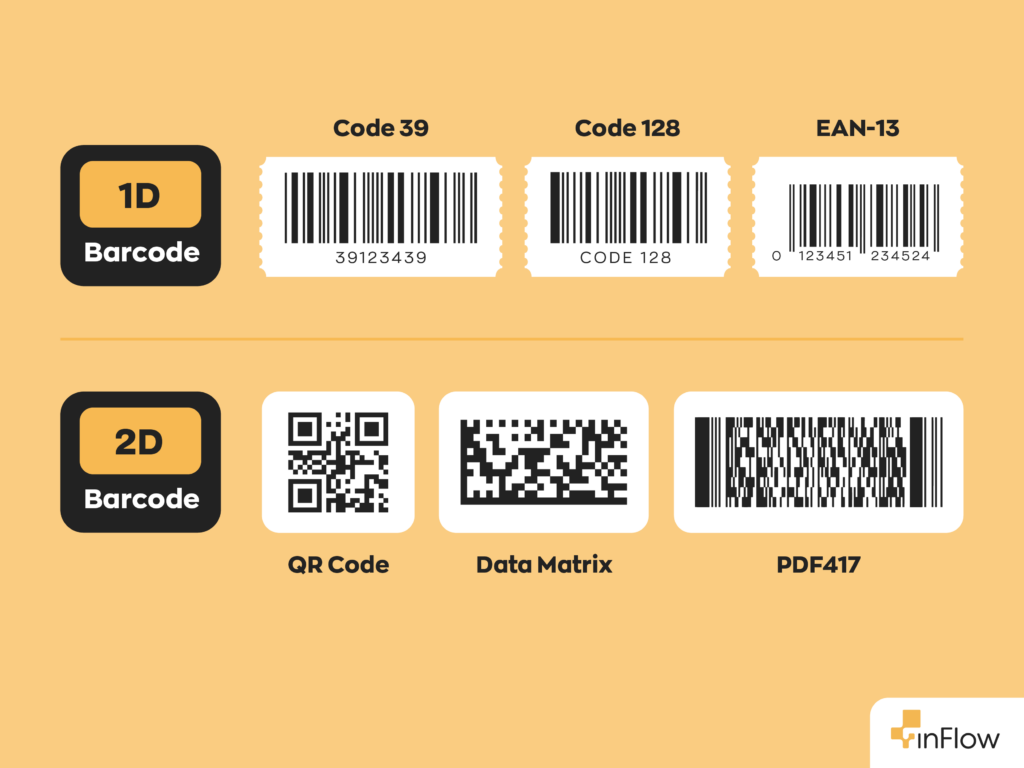
A barcode represents information as a visual pattern that a machine can read. One-dimensional (1D) symbols use bars and spaces; two-dimensional (2D) symbols, such as QR Code and Data Matrix, use patterns of small shapes. A reader captures the pattern, decodes it and passes the resulting information to software.
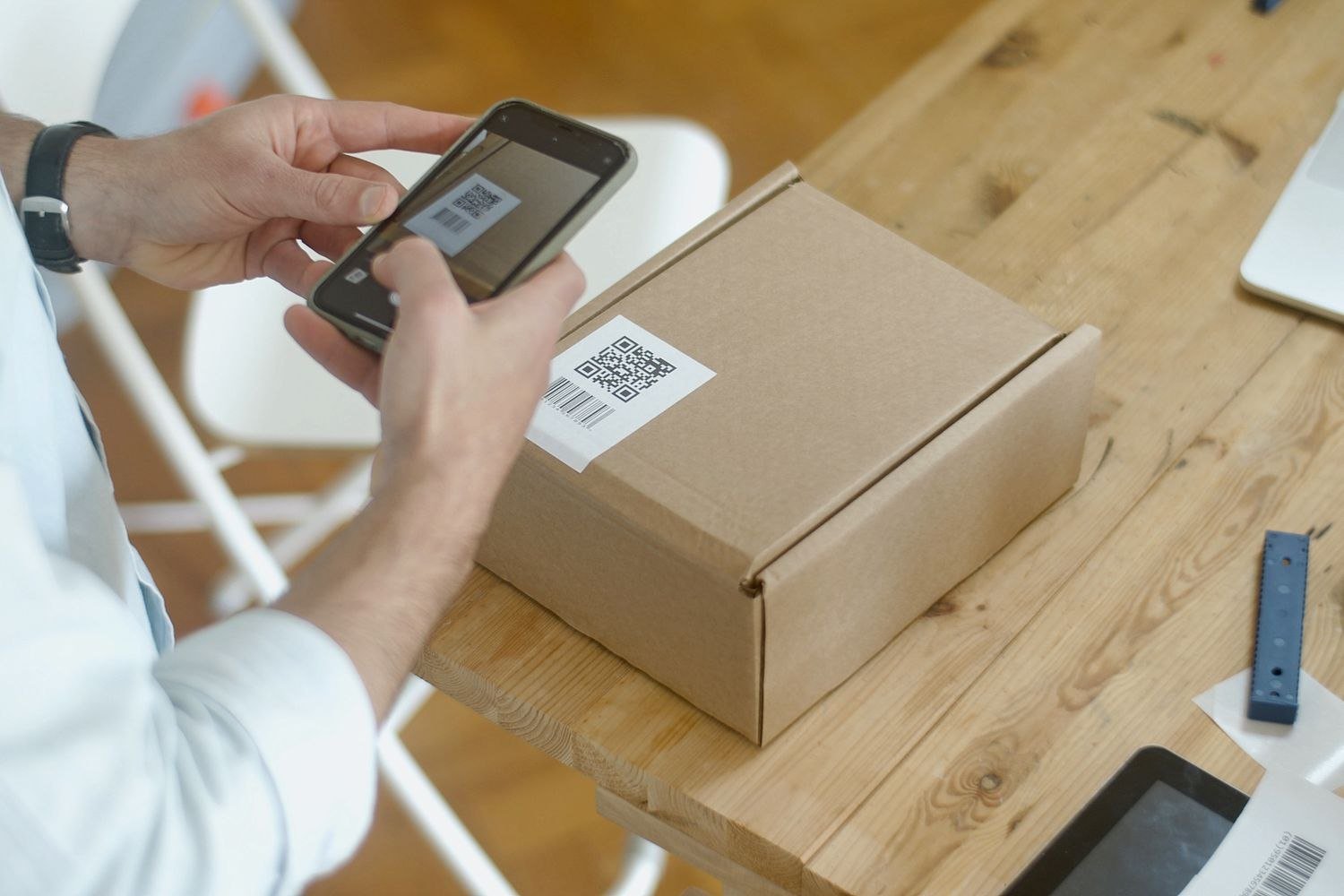
This explanation follows a printed barcode from optical capture to decoded data in an application. Screens can also display symbols, which a compatible camera or imaging reader can capture.
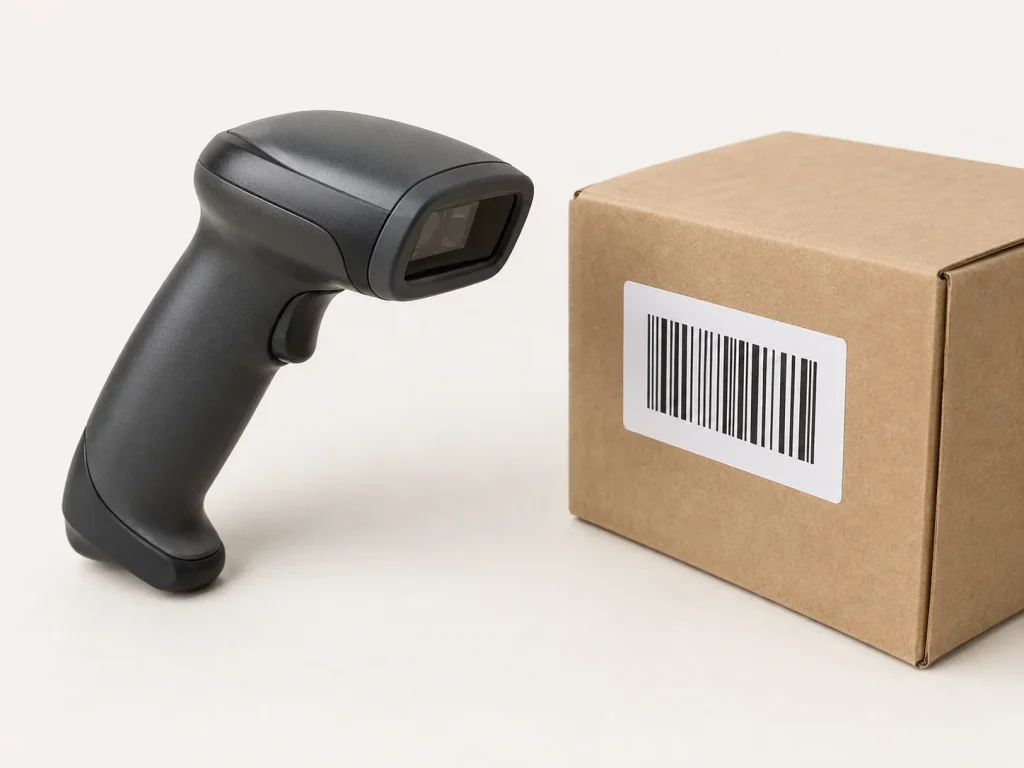
1D and 2D symbols
Main components.
Barcode symbol
A visible pattern represents data according to a defined encoding format.

Optical sensor or camera
Captures differences in light reflected from the symbol; illumination may come from the reader or surroundings.
Decoder
Recognizes the encoded pattern and converts it into data, within the reader or in software.
Application
Receives the decoded data and interprets it according to its own rules.
Optical contrast
How it works.
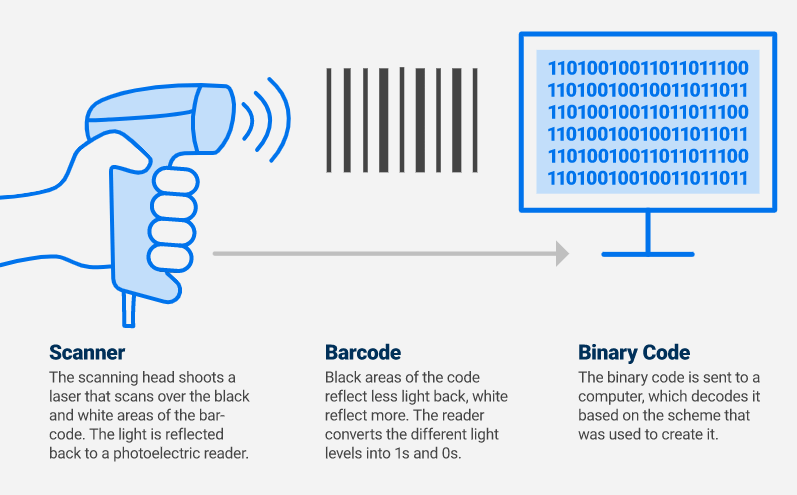
Barcode reading uses optical contrast. Dark and light areas create a pattern that a sensor can capture. The decoder applies the symbol format’s rules to recover the information represented by that pattern.
Light makes the pattern visible
Light reaches the symbol, whose dark and light areas reflect different amounts.
The sensor captures the pattern
An optical sensor measures the reflected light, or a camera records an image.
The decoder recovers the data
The decoder recognizes the symbol’s structure and translates its pattern into the encoded information.
The application interprets the result
The decoded data reaches an application. Any database lookup or subsequent action happens there.
Decoded data
What information does it produce?
The output is the data encoded in the symbol: for example, an identifier, text or structured fields.
Example data
Example decoded value: ITEM-001
ITEM-001 is an example value. A name or description appears only if it is encoded or supplied separately by the application.
The meaning and uniqueness of a code depend on its encoding and assignment; a barcode does not automatically identify an individual unit.