
Technology fundamentals
Near Field Communication
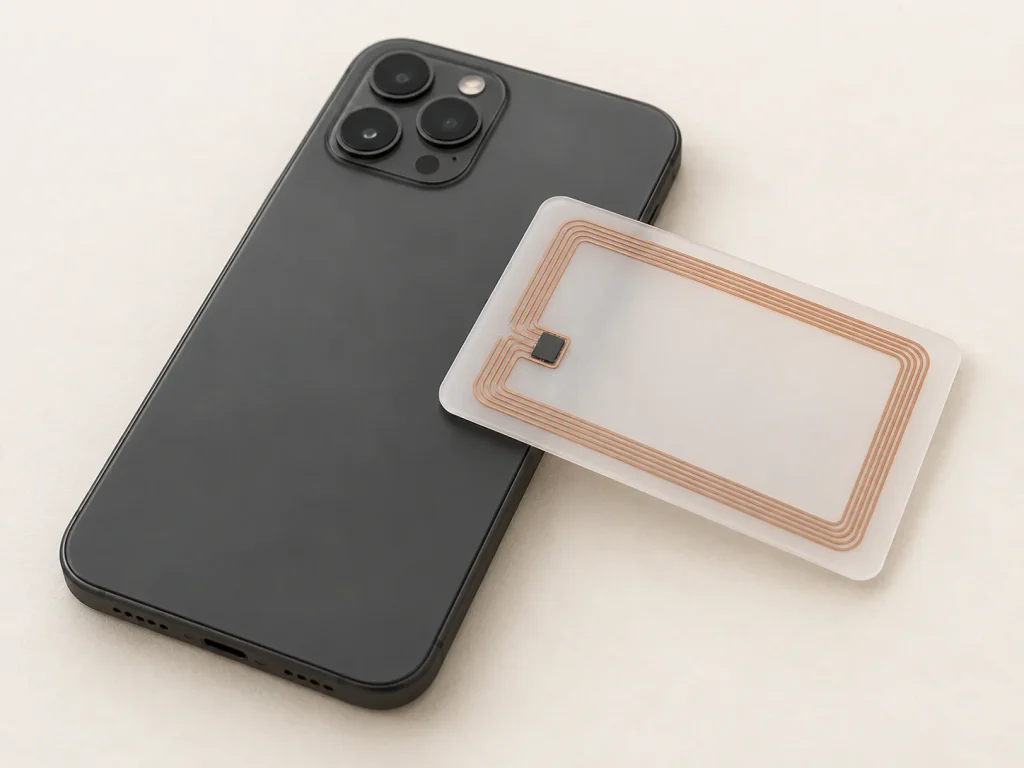
Near Field Communication (NFC) exchanges information between nearby devices using a 13.56 MHz field. When a powered reader approaches a passive tag, its field supplies the tag’s operating energy and enables an exchange of information that software can process.
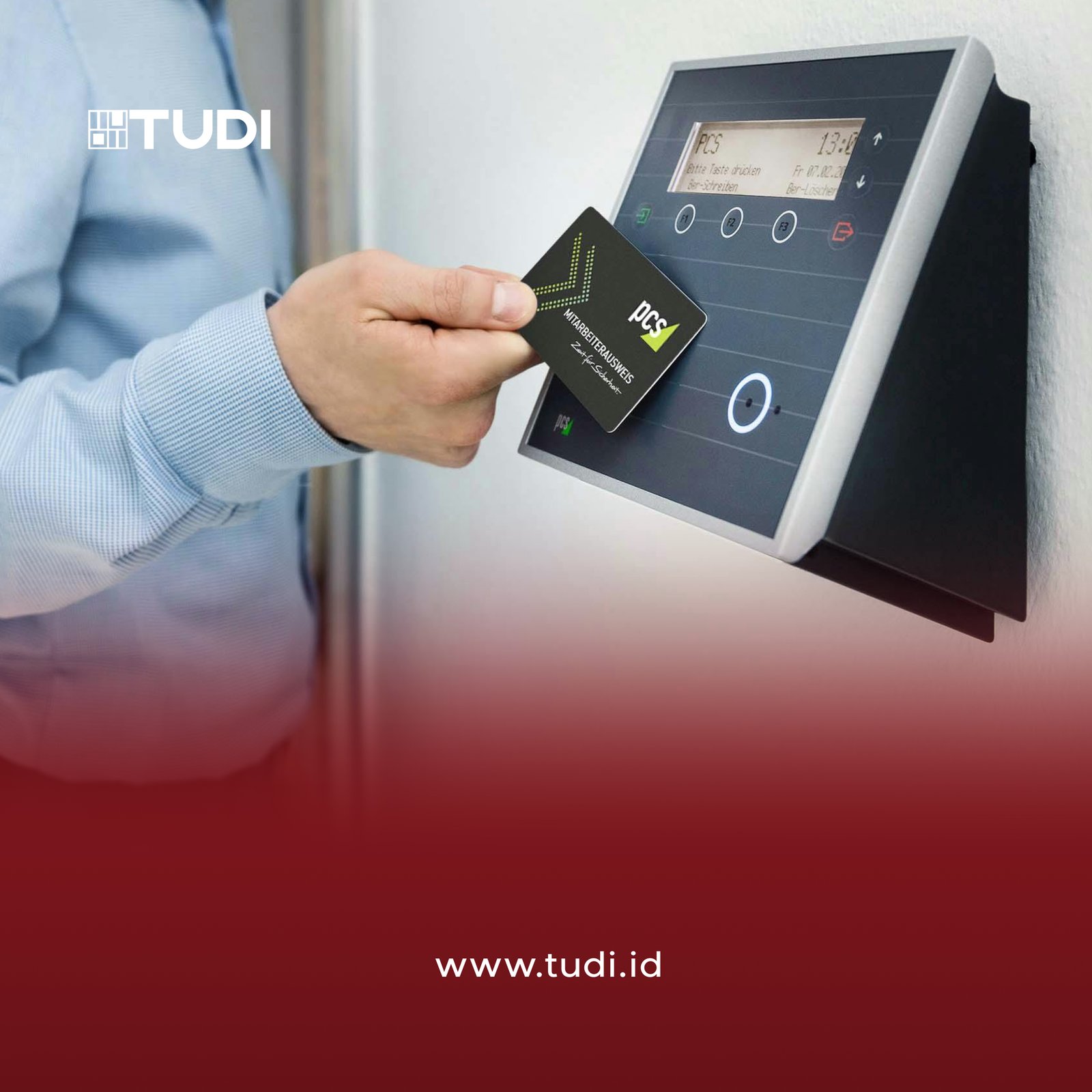
NFC belongs to the high-frequency (HF) RFID technology family. This explanation follows a powered NFC reader reading a passive tag. NFC also supports other operating modes, including card emulation.
High-frequency RFID family
Main components.
Reader or NFC device
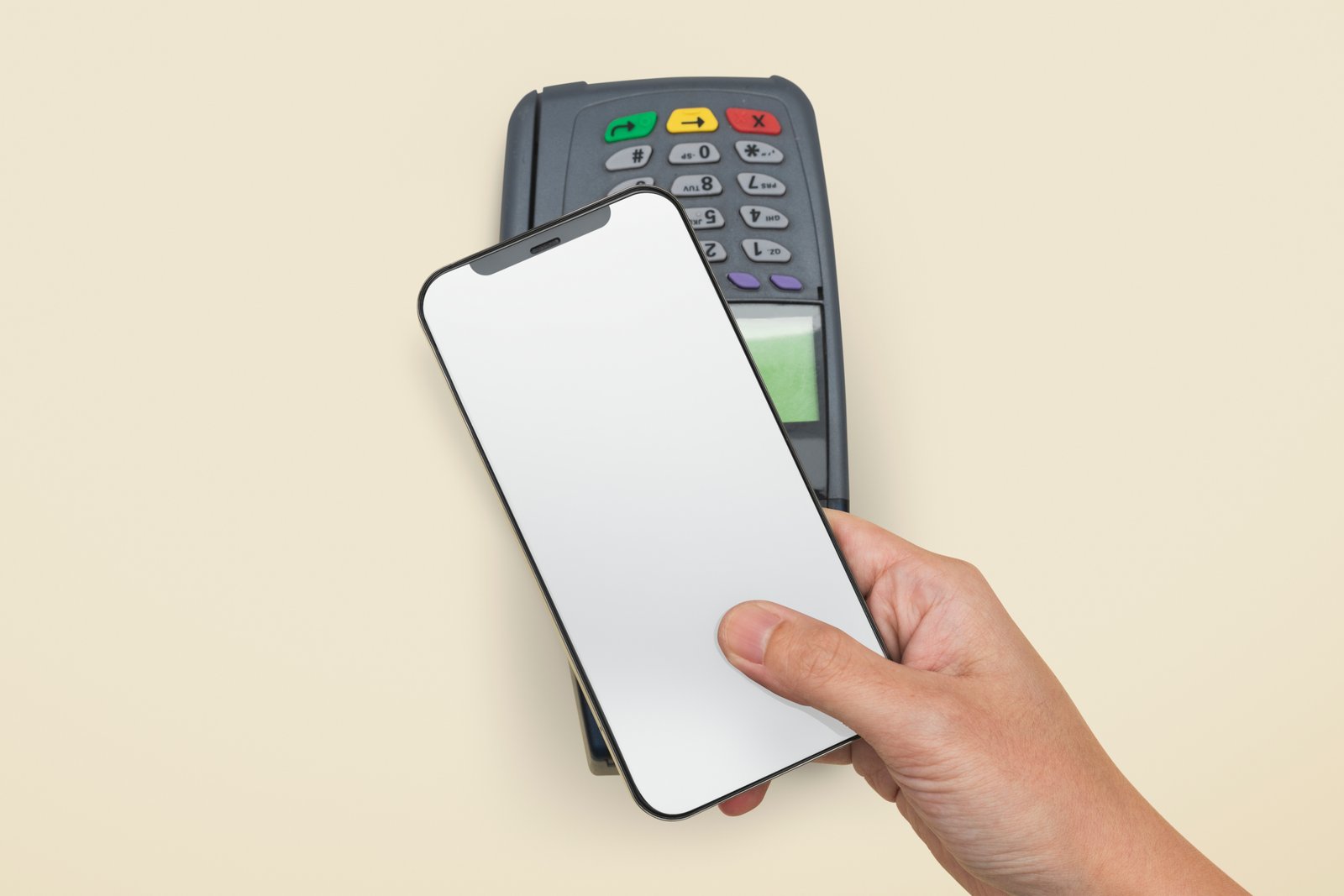
Uses its own power, antenna and controller to create the field and communicate with the tag.
Passive tag
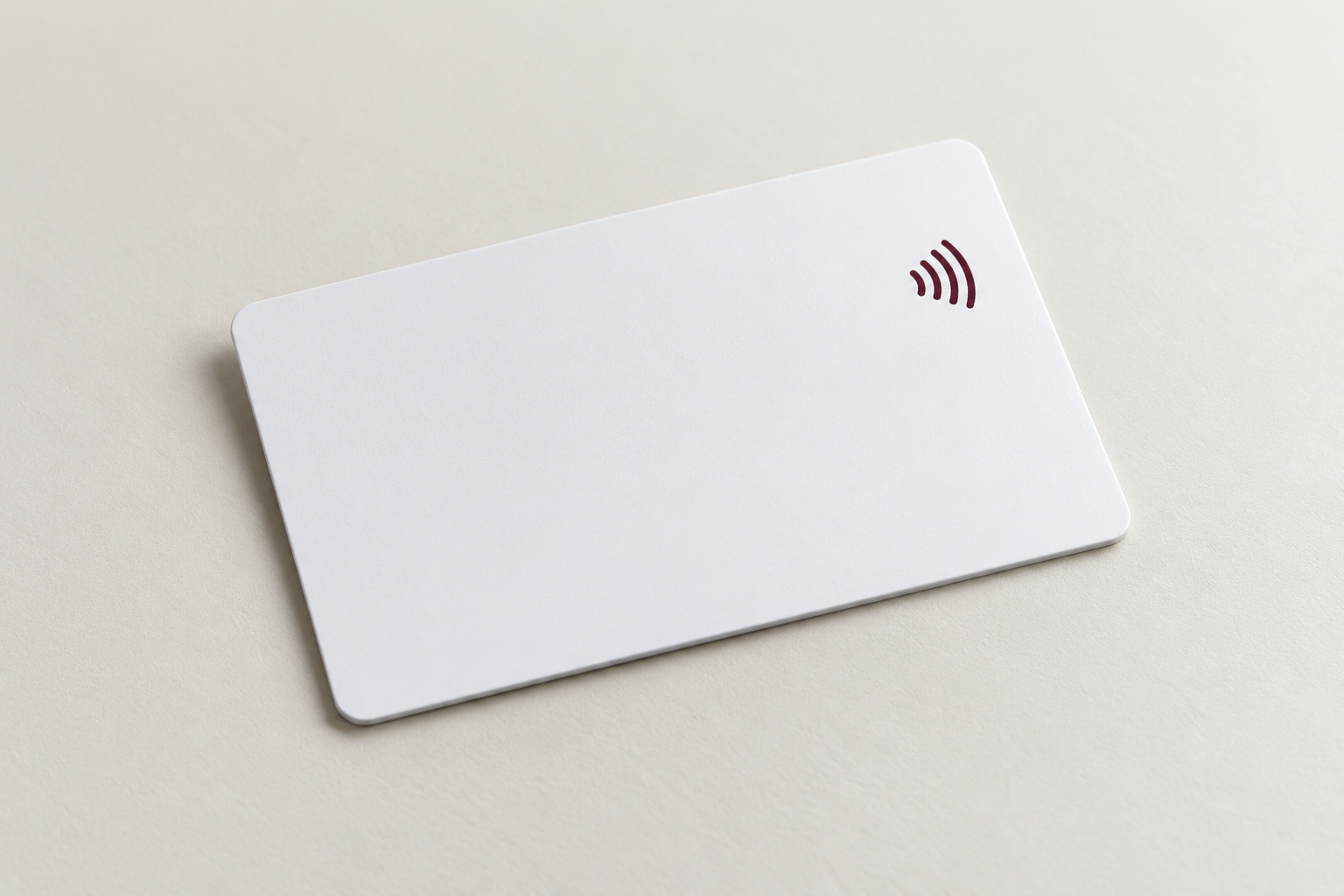
Contains an antenna and chip, using energy from the reader’s field to make its stored information available.
Application
Receives the information through the NFC controller and interprets its content.
13.56 MHz field
How it works.
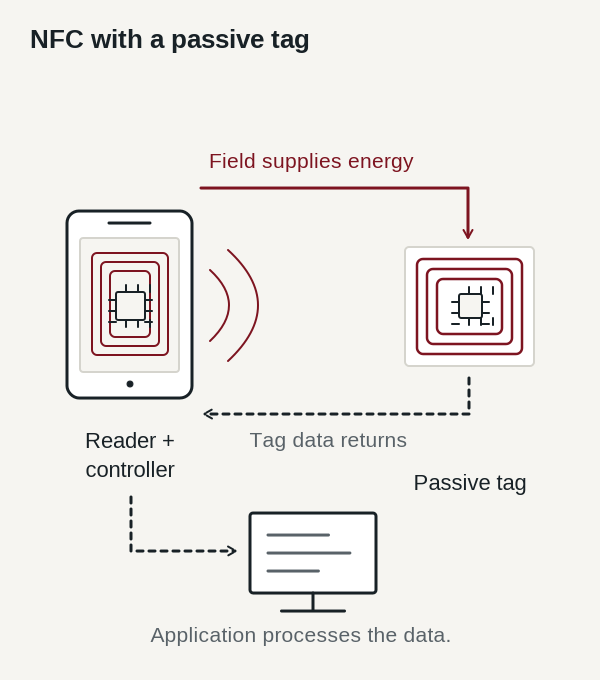
The reader creates an alternating magnetic field at 13.56 MHz. When the passive tag is close enough, its antenna receives energy from that field and supplies it to the chip. The same close-range interaction enables communication between reader and tag.
The reader creates a field
When a read operation starts, the powered reader uses its antenna to create the NFC field.
The tag receives energy
Bringing the passive tag into the field lets its antenna collect energy. That energy powers the tag chip for the exchange.
Information is exchanged
The reader communicates with the tag. The tag responds by changing the electrical load on its antenna, which the reader detects through the field.
The application receives content
The NFC controller processes the response and passes the information to software. The application interprets the content it understands.
Stored content
What information does it produce?
Reading a tag can provide stored content, such as a text record. This example shows the content and its type; actual content depends on what is stored on the tag.
Example data
Content type: Text
Decoded content: Item A-01
The application decides how to use the content, for example by displaying the text. Reading, interpreting and acting on that information are separate stages.
The passive tag in this example needs no battery. An NFC phone or reader still uses its own power, and other NFC modes do not necessarily follow this passive-tag sequence.